Data engineering & analytics 1 min read
ID3 Benchmark Prediction: Spotting Wellbore Issues Earlier
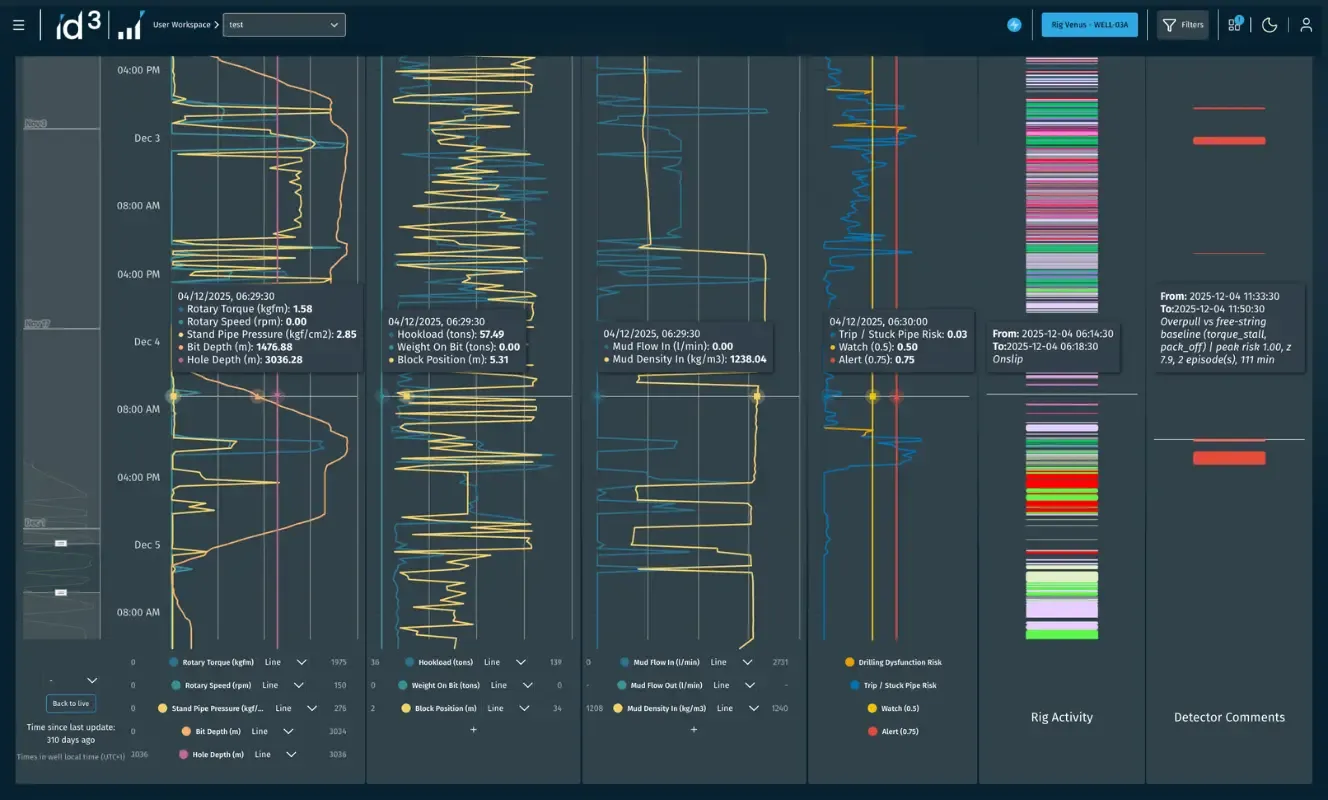
Prediction, the extension of ID3 Software’s Benchmark module, turns each well’s recent operating data into clear indicators of developing wellbore issues, helping drilling teams recognise unusual behaviour, understand its drivers and focus on changes that need investigation and action. The models have been tested on data from more than 100 wells, supporting their development and evaluation across a range of drilling conditions.
Model 1: Drilling Dysfunction
Prediction monitors drilling performance to identify unusual behaviour in parameters such as torque, pressure, rotary speed and hookload. Using the well’s recent operating history as a reference, it highlights changes that may indicate developing drilling problems. When the indicator rises, it identifies the main parameter driving the change, giving crews a clear starting point for investigation.
Model 2: Stuck-Pipe Precursors and Targeted Notifications
Stuck pipe can lead to costly delays and complex recovery operations. Prediction monitors signs of increasing resistance or restricted pipe movement during tripping and other operations away from the bottom of the well. It highlights excessive pulling force, rotational stalling and pressure changes associated with obstruction around the drillstring. Related warning episodes are grouped to limit repeated notifications, with escalation when severity increases or the developing mechanism changes, helping teams prioritise operations.
Model 3: Hydraulics
While the pumps are running, Prediction monitors the mud system for signals associated with drillstring washout, fluid losses and unexpected increases in pit volume. Pressure and fluid-volume changes provide practical information for assessing developing conditions. Unexpected pit gains are presented as informational signals for verification through flow checks, supporting crews in deciding where remediation is needed.
Model 4: Static Monitoring
Prediction extends fluid monitoring to periods when the pumps are off, including flow checks, waiting on cement and tripping. By tracking changes in pit or trip-tank levels, it highlights fluid losses and gains that may require attention. This provides additional visibility during these quieter phases, helping crews assess changing conditions throughout operations.
Discover how Prediction can support your drilling operations. Contact our team to arrange a demo.